
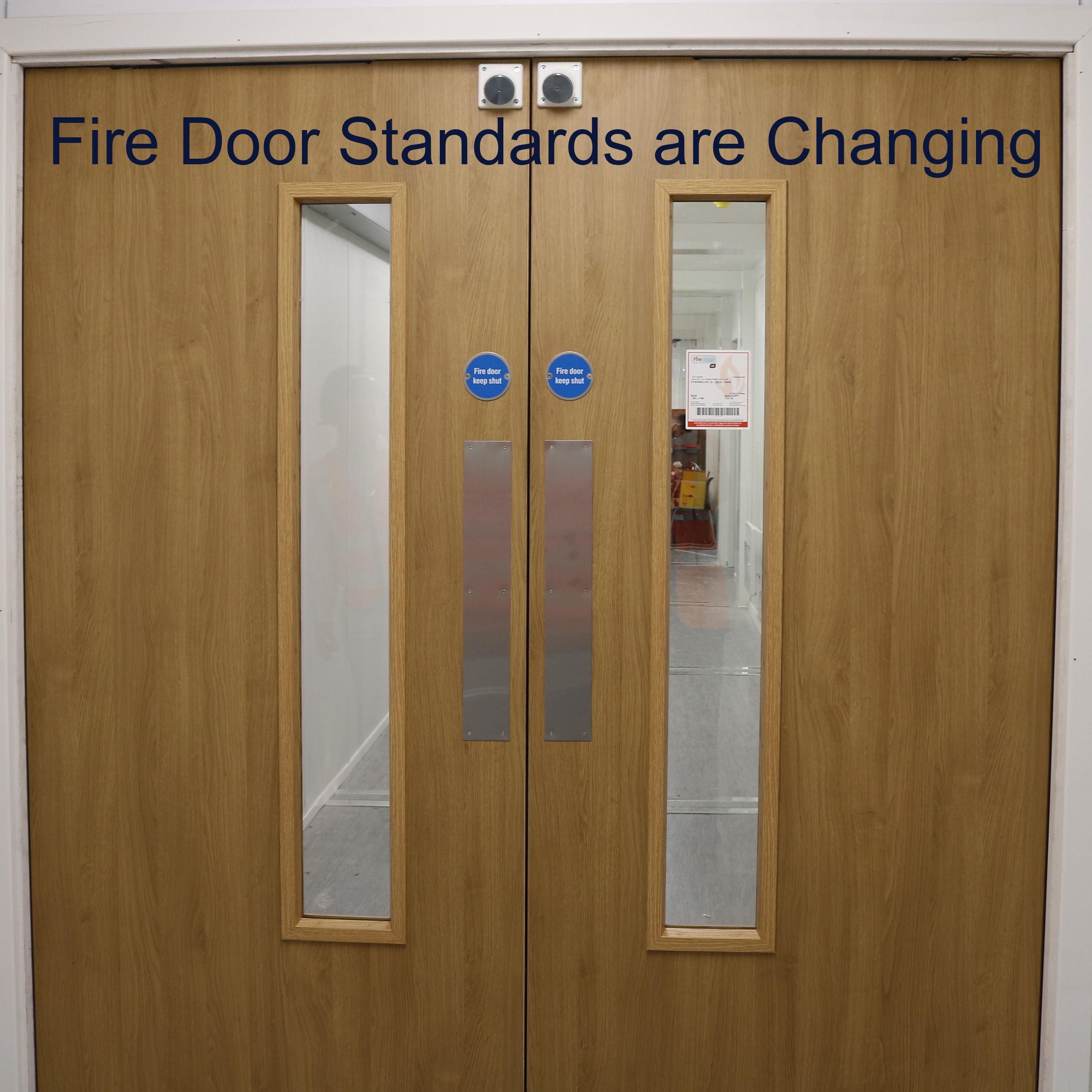
BS 476 vs BS EN 1634: What the 2029 Fire Door Standard Changes Mean
Quick answer: BS 476-tested fire doors remain compliant today, but from 2 September 2029 the recognised route for demonstrating fire resistance for new work in Great Britain will move towards BS EN 1634 testing with EN 13501 classification. Existing compliant BS 476 fire doors will not automatically become non-compliant, but specifiers should prepare now for the transition.
What is changing for fire door testing in 2029?
From 2 September 2029, Approved Document B will no longer reference the BS 476 fire resistance classification route. For new work in Great Britain, BS EN 1634 testing and EN 13501 classification will become the expected route for demonstrating fire resistance.
What are BS 476 and BS EN 1634?
BS 476 Part 22 and BS EN 1634-1 are fire resistance test standards used to demonstrate the performance of fire doors and doorsets under fire conditions. Both are currently recognised routes, but they sit within different testing and classification frameworks.
- BS 476 Part 22 – the long-established British Standard.
- BS EN 1634-1 – the European fire resistance test standard.
Both involve testing a complete doorset under fire conditions and both are currently recognised within Approved Document B. Neither standard should be viewed as “unsafe” or “inferior”—both have protected buildings successfully for many years.
| Standard | What it is | Why it matters |
| BS 476 Part 22 | The long-established British fire resistance test route. | Still compliant today where accepted by the project specification and Building Regulations. |
| BS EN 1634-1 | The European fire resistance test standard for doorsets and shutters. | Expected to become the primary route for new work in Great Britain after 2 September 2029. |
| EN 13501 | The European classification system used alongside BS EN 1634 testing. | Provides a consistent classification route for fire resistance performance. |
Do BS 476 fire doors become non-compliant in 2029?
No. Existing compliant BS 476 fire doors do not automatically become non-compliant when the 2029 change takes effect. The change affects the recognised route for demonstrating fire resistance for new work in Great Britain, not the immediate compliance status of existing correctly specified, installed and maintained fire doors.
The change forms part of the wider shift towards clearer evidence, stronger product traceability and more consistent fire safety documentation following the Building Safety Act 2022.
What challenges does the transition create for manufacturers?
The transition presents significant challenges for manufacturers and suppliers.
Testing complete doorsets to BS EN 1634 is both time-consuming and expensive, with every variation in size, glazing, hardware or configuration requiring supporting evidence. Manufacturers must also update certification, technical literature and installation guidance while continuing to support existing BS 476 products during the transition period.
For many suppliers, this represents years of investment in testing and product development.
What are the benefits for architects, contractors and building owners?
While the transition creates additional work for manufacturers, it offers several long-term benefits for customers.
A single testing route will:
- Simplify specification.
- Reduce confusion between competing standards.
- Improve consistency across projects.
- Strengthen product traceability.
- Better support the Building Safety Act’s “golden thread” requirements.
For architects and contractors, it will become easier to compare products and specify compliant fire doors with confidence.
Why is third-party certification important for fire doors?
Regardless of which standard a product has been tested to today, third-party certification remains the strongest evidence of quality and compliance.
Certification schemes such as BWF-CERTIFIRE and BM TRADA Q-Mark independently verify that a complete doorset has been tested, manufactured and audited to recognised standards, providing reassurance that the product supplied is consistent with the one originally fire tested.
Should you stop specifying BS 476 fire doors now?
Not necessarily.
For projects commencing before the 2029 deadline, BS 476-tested products remain an acceptable route where permitted by the project specification and Building Regulations. Existing BS 476 fire doors do not need replacing simply because the regulations change. The priority should always be ensuring they remain correctly installed, inspected and maintained.
However, for long-term developments, phased projects and future product strategies, many manufacturers and specifiers are already moving towards BS EN 1634-tested doorsets to future-proof specifications and minimise disruption.
How should you prepare for the 2029 fire door standard change?
The move to a single testing standard is about more than changing test methods. It reflects the industry’s wider shift towards greater accountability, evidence-based specification and safer buildings.
Whether a doorset has been tested to BS 476 or BS EN 1634, the principles remain the same: specify complete tested doorsets, insist on third-party certification, and ensure installation and maintenance are carried out by competent professionals.
As 2029 approaches, those who prepare early will be best placed to deliver compliant, future-ready fire door solutions.
Key takeaways
- BS 476-tested fire doors remain compliant today where they meet the relevant project and regulatory requirements.
- From 2 September 2029, BS EN 1634 testing with EN 13501 classification will become the recognised route for new work in Great Britain.
- Existing BS 476 fire doors do not need replacing simply because the regulations change.
- Third-party certification remains one of the strongest ways to evidence fire door quality and consistency.
- Manufacturers, architects and contractors should review future specifications now to reduce disruption before 2029.
Frequently asked questions
Are BS 476 fire doors still legal?
Yes. BS 476-tested fire doors remain an accepted route today where they meet the relevant project specification and Building Regulations requirements.
Will existing BS 476 fire doors need to be replaced in 2029?
No. Existing compliant fire doors will not automatically need replacing because the recognised test route changes. Correct installation, inspection and maintenance remain essential.
Which fire door standard should be specified for long-term projects?
For long-term developments, phased schemes and projects expected to extend towards or beyond 2029, BS EN 1634-tested doorsets may offer a more future-ready specification route.