Morland Invests in Solar Energy Across Welshpool Manufacturing Sites
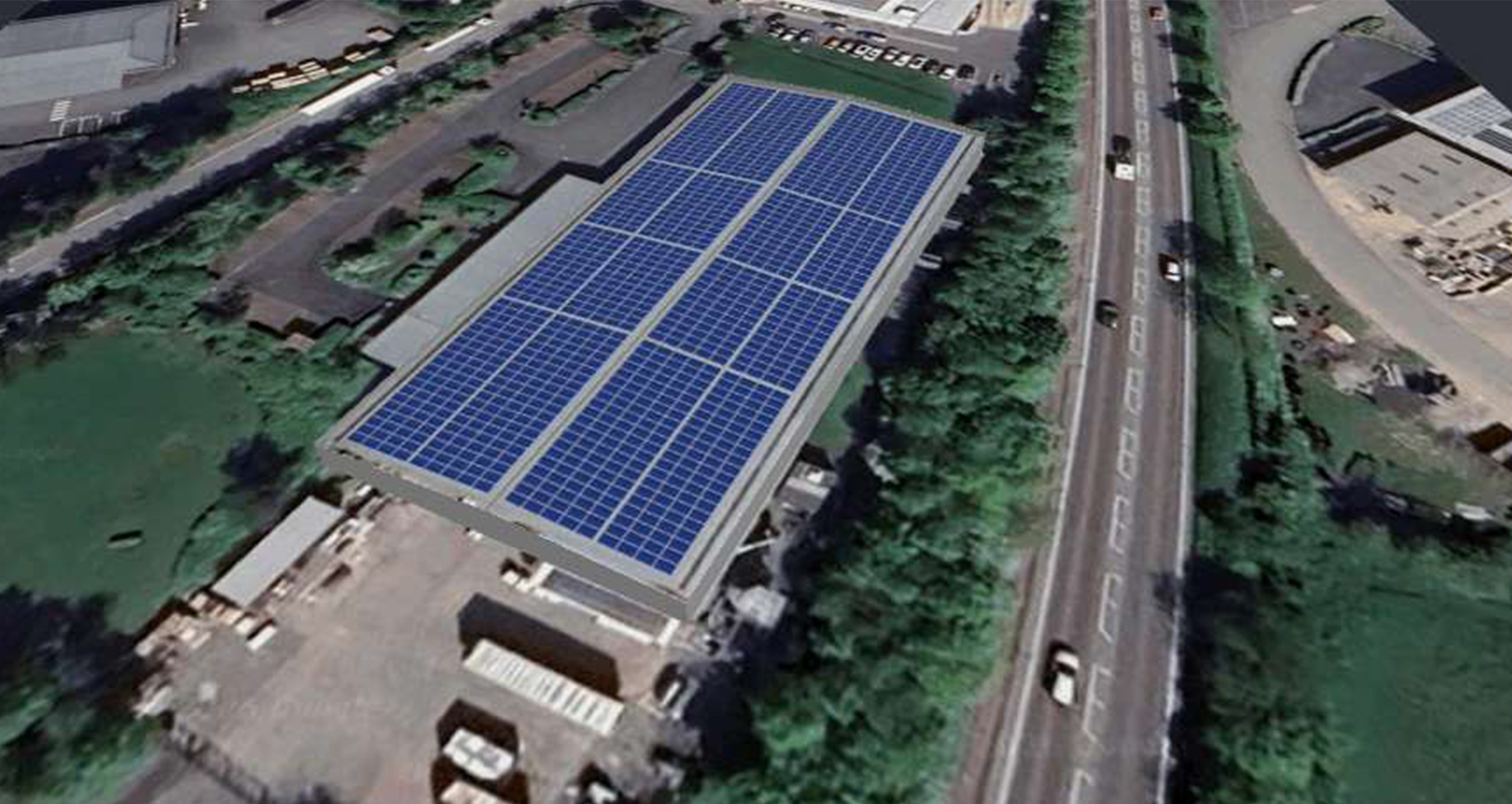
Morland is making a significant investment in renewable energy, with a solar installation across two of our manufacturing facilities in Welshpool.
The investment will see approximately 904 kWp of solar photovoltaic capacity installed across our Unit 4 and Unit 10 sites, generating an estimated 843 MWh of renewable electricity every year.
But for Morland, the project is about much more than generating renewable energy. It forms part of our wider strategy to strengthen the efficiency, resilience and long-term competitiveness of our UK manufacturing operations.
Investing in a more resilient manufacturing operation
Energy is an important consideration for any manufacturing business. Generating more of our electricity on-site will reduce our reliance on grid-supplied energy and help protect Morland against future volatility in electricity prices.
Around 58% of the electricity generated by the new solar systems is expected to be consumed directly within our manufacturing operations, helping to reduce our long-term energy costs and manufacturing overheads.
This supports a stronger and more resilient cost base, allowing us to continue investing in the areas that matter to our customers, from our manufacturing capabilities and new products to our people and service.
It is another example of Morland taking a long-term approach to investment in our UK manufacturing facilities.
904 kWp of new solar capacity
The project is being delivered by MyPower and covers two of Morland’s principal manufacturing facilities in Welshpool.
The installations comprise:
- 483.67 kWp at Unit 4
- 420.42 kWp at Unit 10
- 904.09 kWp combined solar capacity
The roof-mounted systems have been designed around the energy requirements of our manufacturing operations, with a particular emphasis on maximising the amount of electricity that can be used on-site rather than exported back to the grid.
With an anticipated operational life of at least 25 years, the installation represents a significant long-term investment in Morland’s manufacturing infrastructure.
Reducing the environmental impact of manufacturing
Alongside the operational benefits, the project represents another important step in reducing the environmental impact of our activities.
Once fully operational, the systems are expected to generate approximately 843 MWh of renewable electricity annually, comprising 471 MWh from Unit 4 and 372 MWh from Unit 10.
That’s equivalent to the annual electricity consumption of approximately 280 average UK homes.
The installations are also expected to reduce Morland’s carbon emissions by approximately 163 tonnes of CO₂ each year.
Supporting our customers’ sustainability objectives
Sustainability is becoming an increasingly important part of customers’ supply-chain decisions.
For our customers, the investment means working with a UK manufacturer that is actively investing in reducing the carbon associated with its own operations while also strengthening the resilience and efficiency of its manufacturing base.
Reducing our reliance on grid electricity also helps us manage one of the variable costs associated with manufacturing, supporting Morland’s ability to remain competitive and continue investing in the products, capacity and service our customers require.
Investing for the long term
The solar project follows a wider review of energy consumption, operating costs and sustainability opportunities across Morland’s manufacturing operations.
A key consideration throughout its development has been matching generation capacity with the actual energy requirements of our sites. This helps maximise the amount of renewable electricity used directly by the business and strengthens the long-term return from the investment.
Installation has been planned to minimise disruption to normal manufacturing activities, with the systems expected to be commissioned during winter 2026.
The project represents another step in Morland’s wider programme of investment in our Welshpool manufacturing operations.
As both energy costs and environmental expectations continue to evolve, we will continue to explore opportunities to improve efficiency, reduce emissions and invest in a resilient and competitive UK manufacturing business.